
This year, SHEMIND prioritizes Palestinian medical students unable to complete practical training due to ongoing conflict. The clinical rotation (co-assistant) program at UGM ensures these students fulfill critical stages of their education, safeguarding their professional development despite disruptions back home.
The Scholarship for Health and Medical Development by Indonesian AID (SHEMIND): UGM for Palestine is a targeted initiative under the Indonesian Government’s Grant Provision Program, supporting the Sustainable Development Goals (SDGs)—particularly SDG 3 (Good Health and Well-being) and SDG 4 (Quality Education). Reflecting Indonesia’s commitment to global solidarity, this program embodies the spirit of the Asia-Africa Conference and advances South-South and Triangular Cooperation.
SHEMIND strengthens health sector capacity in conflict-affected regions, with a current focus on Palestine. The program offers full scholarships—covering academic and living expenses—for Palestinian medical students and health professionals nominated by their government. Scholars train at Universitas Gadjah Mada (UGM), Indonesia’s leading medical institution, gaining clinical expertise and hands-on experience in a stable academic environment.
Beyond academics, SHEMIND serves as a bridge for meaningful connections between Indonesia and Palestine by fostering people-to-people ties, intercultural exchange, and long-term collaboration. Scholars gain invaluable benefits from immersive training at one of Southeast Asia’s leading academic hospitals, equipping them with hands-on clinical expertise while experiencing Indonesia’s healthcare system firsthand. The program also cultivates leadership skills and exposes participants to global health best practices, preparing them to address complex medical challenges. Additionally, scholars join a supportive professional network that will empower their future contributions to Palestine’s healthcare system—ensuring the knowledge and relationships built during their studies continue to create impact long after graduation. Through this holistic approach, SHEMIND transcends traditional education by building enduring partnerships that strengthen both nations.
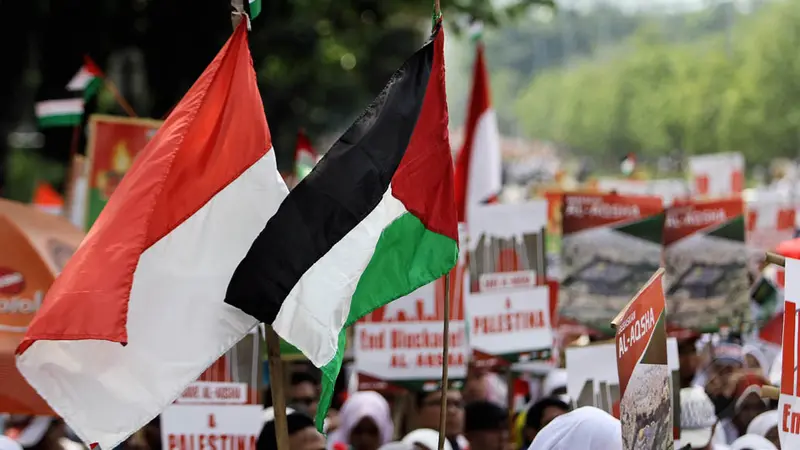
The SHEMIND program delivers sustainable impact across multiple levels. For Palestine, graduates will play a vital role in rebuilding the healthcare system, addressing critical shortages of trained professionals and improving community health outcomes. For Indonesia, this initiative strengthens the nation’s leadership in global health diplomacy and South-South cooperation while expanding UGM’s international partnerships and fostering cross-cultural medical innovation. It also reinforces Indonesia’s commitment to the Sustainable Development Goals, aligning with its foreign policy priorities. On a global scale, SHEMIND advances equitable access to medical education in conflict zones, supports health system resilience in crisis-affected regions, and serves as a model for effective triangular cooperation. By investing in Palestine’s health workforce, the program creates a multiplier effect—enhancing individual livelihoods, institutional capabilities, and broader progress toward global health equity. Through this initiative, Indonesia demonstrates how targeted educational support can generate far-reaching, sustainable change for partner nations and the international community alike.
The scholarship recipients will primarily consist of undergraduate medical students at partner institution with UGM and Indonesian Aid. In 2025, these partner universities are Al-Azhar University Gaza and Islamic University Medical School in collaboration with PalMed Academy. Nominations shall be provided by the respective deans of each institution. Selection criteria will be determined by the universities based on student eligibility and needs, with minimum requirements as follows:
The selection stage is divided into 2 phases, as follow:
Phase 1. Administrative Selection
Administrative selection checks whether all required documents as stated in the Scholarship Requirement section have been submitted in English. UGM will use the administrative selection results to carry out the academic selection stages.
Phase 2. Academic Selection
The academic selection process builds on the administrative review and consists of two main stages:
The interview is conducted by UGM-appointed interviewers to gather specific information about each candidate. Its purpose is to assess the candidate’s eligibility for the scholarship. UGM sets the criteria for academic selection and determines which candidates qualify to proceed.

| No | Stages | Time |
| 1 | Registration Open (Administrative Document Submission) | 3 November 2025 |
| 2 | Administrative Selection Process a. By Indonesian Representative (KBRI) b. By Indonesian MoHEST | 4 – 7 November 2025 |
| 3 | Academic Selection | 10 – 14 November 2025 |
| 4 | Academic selection Result | 17 November 2025 |
| 5 | House Clearing | 18 – 25 November 2025 |
| 6 | Result Announcement | 28 November 2025 |
| 7 | Administrative Process a. Student VISA (Rp.0) b. Study Permit Letter c. State Secretariat Service Note d. KITAS | 1 – 31 December 2025 |
| 8 | Arrival in Indonesia | 5 January 2026 |
| 9 | Pre-Study (BIPA, matriculation, including pre-departure preparation) | Online: start from 1 December 2025 Offline: start from 5 January 2026 |
| 10 | Start of Academic Year | May 2026 |
Vice Dean of Academic and Student Affairs
Faculty of Medicine, Public Health, and Nursing
Universitas Gadjah Mada
Farmako, Sekip Utara, Yogyakarta
Indonesia
Email:
wd1.fk@ugm.ac.id
akademik.fk@ugm.ac.id