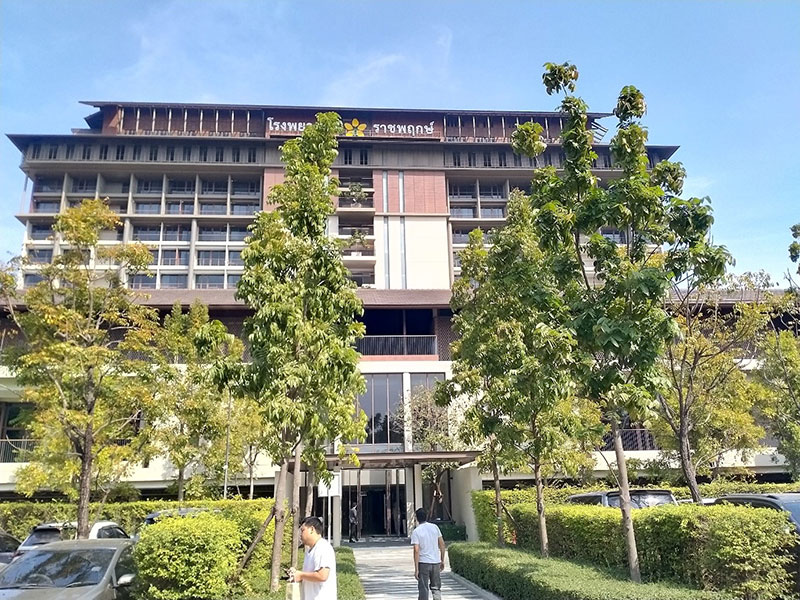
Ratchaphruek Hospital in Khon Kaen Province, Thailand, has become the center of attention as a model hospital with the concept of a “Healing Environment Hospital” that prioritizes the well-being of patients, families, and medical staff. The hospital was founded in 1994 with an initial capacity of 50 beds before eventually expanding to 200 beds in 2018. With the main philosophy that healing is crucial as curing, Ratchaphruek Hospital focuses not only on medical aspects, but also psychological and environmental aspects in the patient healing process.
The founder of Ratchaphruek Hospital, Dr. Teerawat Shinakarin, and his team have developed empathy-based health services for more than 30 years. The hospital upholds three main principles: (1) patients are human beings, not just patients; (2) healing is as important as treatment; and (3) medical personnel are not just resources, but individuals with needs and well-being that must be taken into account. With this concept, Ratchaphruek Hospital has become the private hospital with the largest market share in Khon Kaen, even though it is not the highest-earning one.
As a for-profit private hospital, Ratchaphruek Hospital implements an inclusive business model that balances humanity and profitability. Healthcare costs at this hospital are lower than other private hospitals in the Khon Kaen region, with an interpersonal healing relationship approach between doctors and patients. In the medical staff recruitment process, hospital management emphasizes the importance of empathy, communication skills, and the ability to understand the needs of patients and their families.
The concept of a healing environment is implemented through hospital design that supports the natural healing process. Ratchaphruek Hospital has extensive green areas, a roof garden, optimal air ventilation, and interaction spaces for patients and medical personnel. In the pediatric ward, beds are designed to accommodate both patients and parents to create a sense of security and comfort. Meanwhile, the ICU is designed with access to green views to reduce patient stress.
In terms of equitable access to healthcare under SDG 3: Good Health and Well-being, Ratchaphruek Hospital serves patients from various economic backgrounds. The hospital accepts emergency patients with Thai government health insurance for underprivileged communities. Meanwhile, people with private insurance or who pay out of pocket can still access premium services according to their needs. This approach makes Ratchaphruek Hospital an institution that plays a role in supporting a more inclusive national health system.
The concept of a patient-friendly hospital based on a healing environment at Ratchaphruek Hospital can be an inspiration for the development of health services in Indonesia. By adopting a more humanistic approach, hospitals in Indonesia can improve the quality of services and patient experience. Additionally, this initiative is in line with Indonesia’s health transformation agenda, particularly in strengthening primary care and improving the welfare of medical personnel, thereby aligning with SDG 4: Quality Education and SDG 17: Partnerships for the Goals.
As an example of a hospital that has successfully implemented the concept of balance between healing and curing, Ratchaphruek Hospital shows that healthcare services do not only focus on medical treatment, but also create an ecosystem that supports the well-being of all parties involved. With this approach, the hope of building a more humane and holistic healing-oriented hospital in Indonesia is becoming increasingly possible. (Contributor: Elisabeth Listyani).