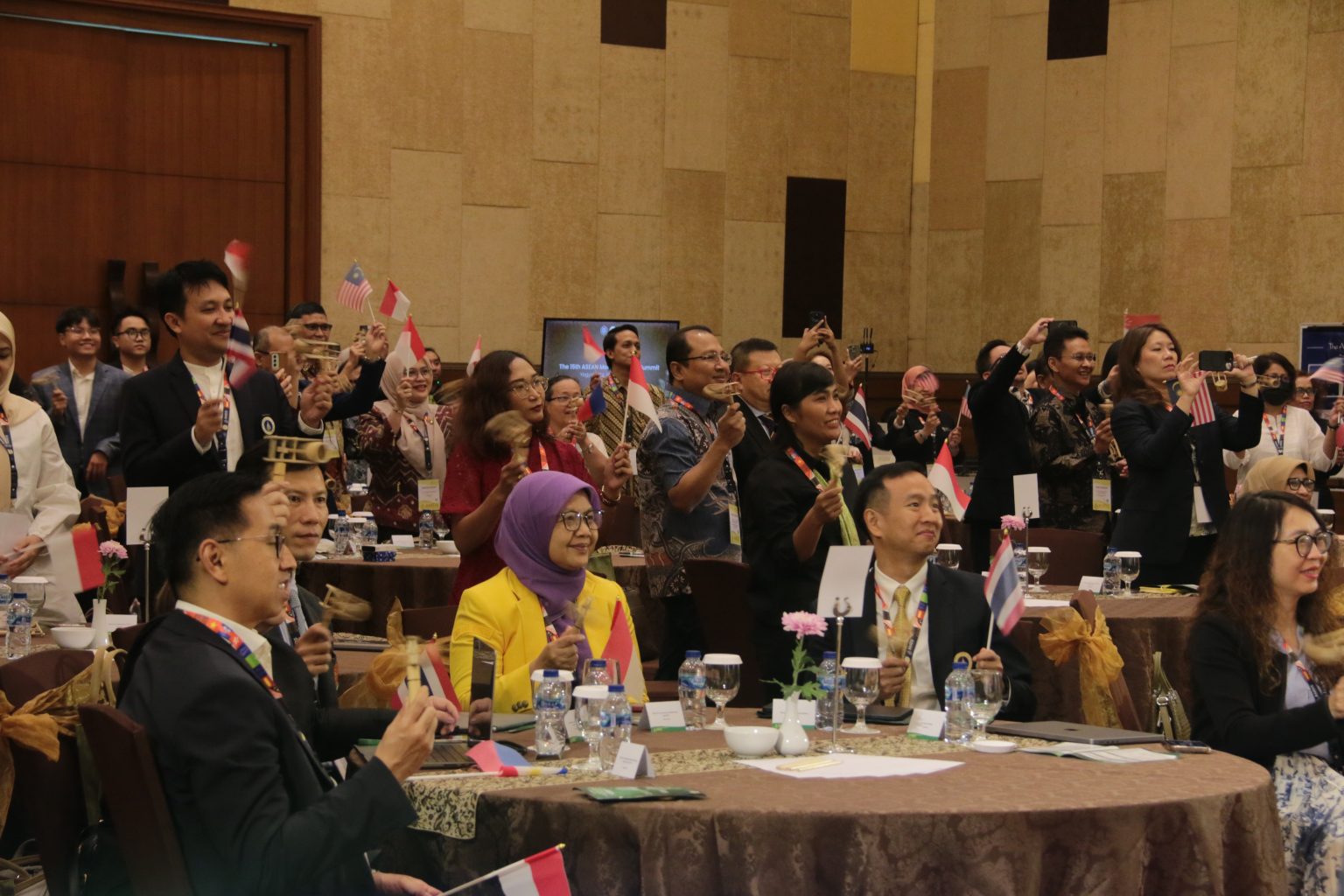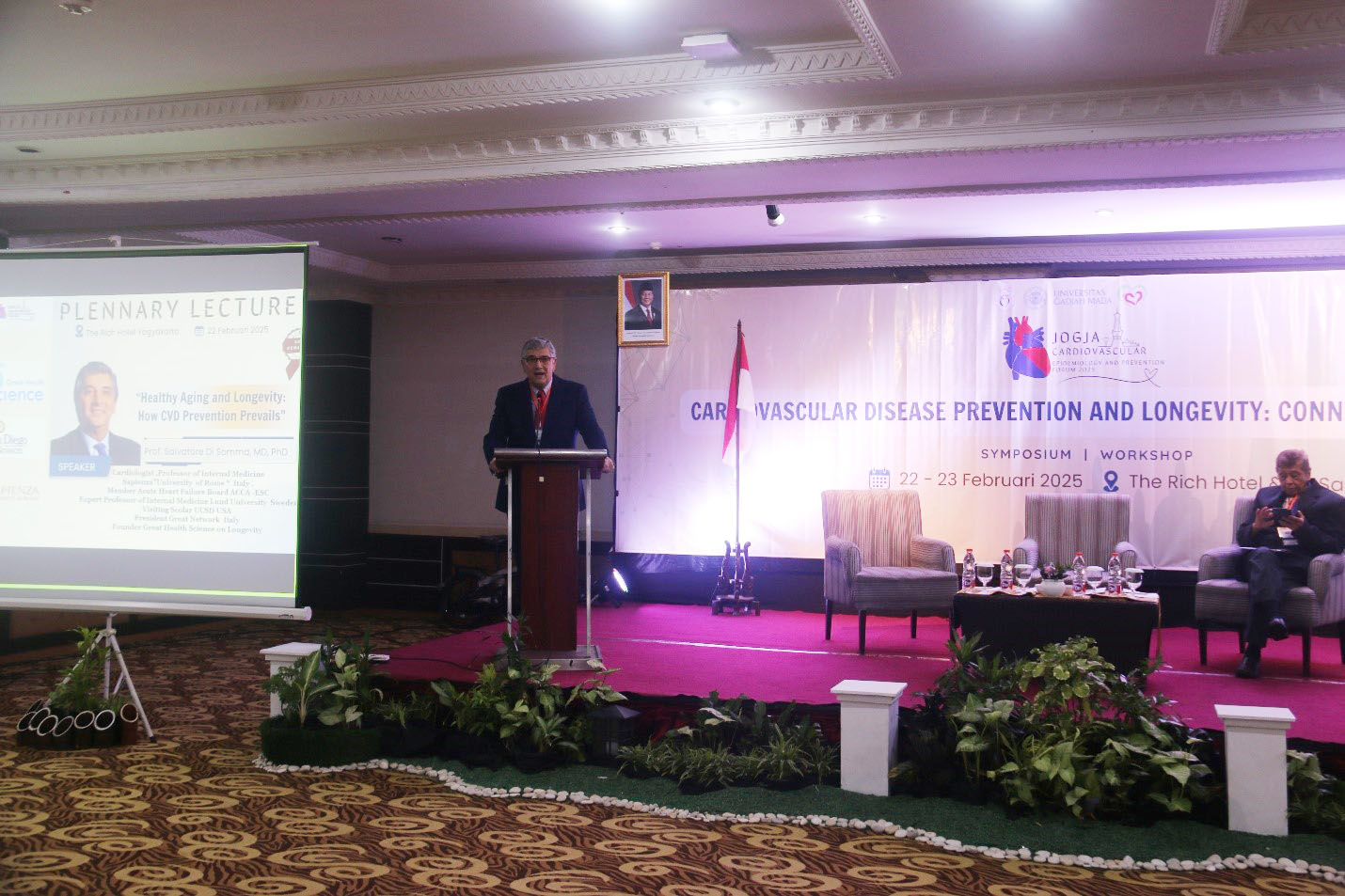
Department of Cardiology and Vascular Medicine, Faculty of Medicine, Public Health, and Nursing, Gadjah Mada University, in collaboration with the Indonesian Cardiovascular Specialist Association (PERKI) Yogyakarta Branch, held the Jogja CardioVascular Epidemiology and Prevention Forum 2025 (CARVEP2025) at Hotel Rich, Yogyakarta on Saturday (February 22). One interesting session in this symposium was the presentation by Professor Salvatore Di Somma, Visiting Professor from La Sapienza University of Italy, who discussed the concept of “Blue Zones” and its relation to cardiovascular disease prevention.
The concept of “Blue Zones” refers to five regions in the world that have populations with high life expectancy and good quality of life, namely Okinawa (Japan), Ogliastra (Italy), Nicoya Peninsula (Costa Rica), Ikaria (Greece), and Loma Linda California (United States). The residents of these areas have healthy lifestyle habits that contribute to longevity and quality aging.
Professor Di Somma explained that there are nine key habits practiced by communities in “Blue Zones” that can be used as a reference in efforts to prevent cardiovascular disease and improve quality of life into old age. These habits include not smoking, consuming plant-based foods, prioritizing grains and nuts, leading an active lifestyle, maintaining close social relationships, prioritizing family, managing stress well, caring for others, and living a meaningful life.
In his presentation, Professor Di Somma also linked these principles of healthy living to the results of his research in The Cilento on Ageing Outcome (CIAO) Study. The study shows that a healthy lifestyle similar to that practiced by residents of the “Blue Zones” can support healthy aging and reduce the risk of degenerative diseases, including cardiovascular disease.
The implementation of a healthy lifestyle is highly relevant in the Indonesian context, which faces an increase in the prevalence of non-communicable diseases such as hypertension, diabetes, and heart disease. Through a deeper understanding of the factors that contribute to longevity and healthy aging, it is hoped that more effective health policies can be developed to improve the welfare of the community.
The CARVEP2025 event is part of FK-KMK UGM’s commitment to supporting the achievement of the Sustainable Development Goals (SDGs), particularly SDG 3: Good Health and Well-being, and SDG 4: Quality Education. By sharing scientific insights from global research and supporting the advocacy of healthy lifestyles, this event is expected to make a real contribution to the prevention of cardiovascular disease and the improvement of the quality of life of the Indonesian people. This activity is also in line with SDG 17: Partnerships for the Goals. (Contributor: Anggoro Budi Hartopo/Translator: Tedy A)